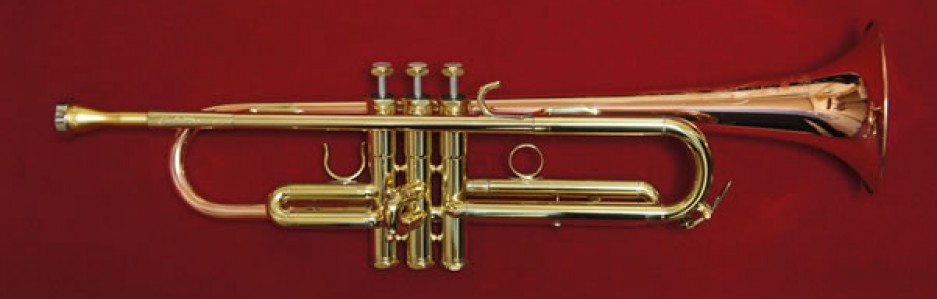
There is a trumpet player named Charlie Porter who posts videos on the internet teaching various aspects of trumpet playing. He posted a video in which he discussed what he called Straight Line playing. You should watch the video. Charlie Porter Video
The concept I want to discuss from this video is that your playing will slide into the nearest slot in the horn. Whether you want it to or not!
There is an article from Scientific American on brass instruments which my father had saved years ago. He was a French Horn player and a physicist. The article was by A. H. Benade and is titled the Physics of Brasses from the 1973 July issue.
These days you can get the article on line for a fee.
The critical part for this discussion is that the mouthpiece, tubes and bell of a trumpet work together to create standing waves in the instrument and the impedance of any tone either enhances or inhibits that tone. The tones with low impedance are the tones which are part of the typical musical scale. Mr. Benade also explains that the trumpet player begins a note and the wave travels through the horn until it is reflected back by the bell or by any other discontinuities in the tubing. The reflection returns to the lips and helps to feed back the horn response so that the lips can continue to buzz with the proper frequency.
Essentially, Charlie Porter and Mr. Benade are saying the same thing. You can play any sound/tone on the mouthpiece and the horn will attempt to push it up or down into the nearest slot. If you do not hear the tone in your head clearly and at the correct pitch you will miss the center of the slot. The horn will then crack or sound weak because the impedance for the tone you played will not be optimal.
One interesting note that Mr. Porter made in his video is that stopping and starting the air flow can be detrimental to your playing. I found that I have been doing that often. Dooo Weee with a slight break between the low note and the high note. He suggests that if you listen to excellent trumpeters you will hear that they do not do this. They will play DoooEeee and the transition as the note slides into the slot from above or below is very fast. He says to let the horn slot for you to handle difficult pieces and connect the air between the notes.
I’ve found that I have a number of these cracks and missed notes repeatedly in the same tune. I must not be hearing the tones in their proper pitch and/or playing them in the center of the slot. One of these for me is the E at the top of the staff.
I’m going to work on pitching the mouthpiece properly for those intervals.
I’ve already tried using a continuous air flow and tone and sliding it up or down quickly using the DoooEeee idea. This produced a much smoother and less cracked playing experience already.
 becomingjazzdotcom